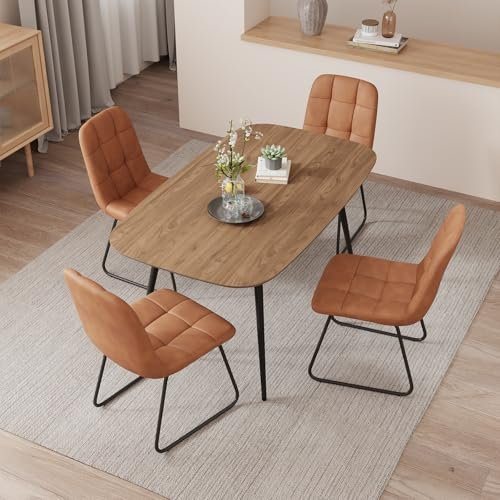
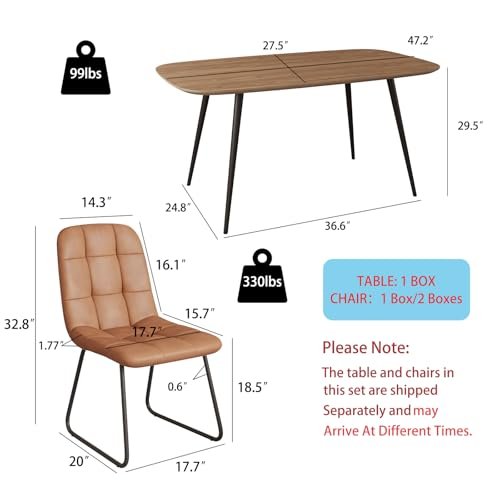
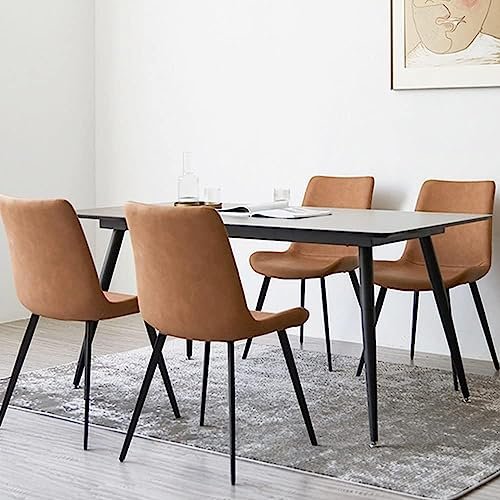
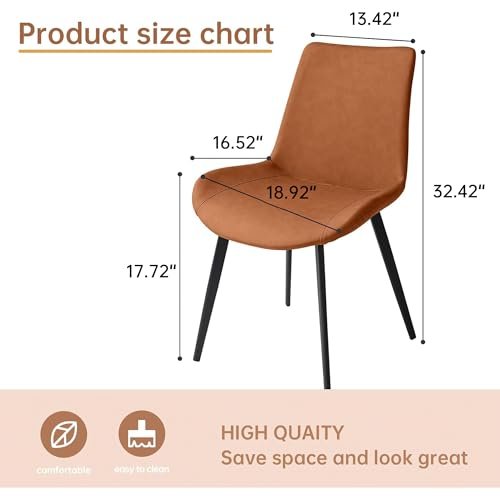
Every HIPIHOM dining chair — from the curved-back JD9025 to the mermaid-silhouette JD2016 to the ergonomic JD9213 — is built on a carbon steel frame with a verified 330 lb weight capacity per chair.
HIPIHOM tabletops are built with MDF up to 1.97 inches thick — finished with scratch-resistant, heat-resistant, and waterproof surface treatments that hold up to hot dishes, wet glasses, and daily family meals.
Ratings on HIPIHOM's dining furniture range from 4.4 to 4.8 stars, with the flagship JD9025 chair line carrying 618 verified reviews and the dining table set line sitting at 216 and climbing.
Multiple verified buyer accounts — including a Wayfair reviewer who assembled 6 chairs alone and another who ordered 10 for a poker table — confirm HIPIHOM chair sets go together with included hardware in under 30 minutes, no extra tools required.
HIPIHOM's catalog is built around the dining room at its core — table sets, standalone tables, chairs, and a corner bench that covers everything from a two-person apartment breakfast nook to an eight-person holiday spread. Beyond furniture, the brand also carries party accessories, cake toppers, crochet craft appliques, and seasonal gift bags — a wider range than you might expect, but useful if you're already shopping here for a table and need something for the celebration around it.
Complete sets from 47.2 inches to a 78.7-inch extended configuration — table and chairs packaged together, with MDF tops, carbon steel or metal legs, and PU leather or corduroy seating for four to eight people.
Seven SKUs across three distinct silhouettes: the curved-back JD9025, the mermaid-shaped JD2016, and the U-shaped ergonomic JD9213. All rate 330 lbs per chair and come in sets of 2 or 4.
Five standalone tables if you already have chairs — round options from 43.3 to 45.3 inches, an extendable oak round (43.2"–59.1"), a 70.8" farmhouse slab with a 1.97-inch MDF top, and an extendable marble-look rectangle.
One L-shaped corner bench in grey fabric — 66.94 inches on the long arm, 330 lb rated, with high-density sponge cushioning and a curved backrest. Fits flush against a kitchen wall for breakfast nook configurations.
Two headband options — a blue fuzzy bow headband and a 6-pack of brown plush bear ears — both made from soft, skin-friendly materials that stretch to 12 inches and hold their shape through a full party night.
Two Mother's Day foil balloon sets: a 20-pack with five heart styles and a 24-pack that includes 21" hearts, a 37" "I Love U" balloon, and linked heart shapes. Self-sealing, suitable for walls, ceilings, or doorways.
Three rhinestone alloy toppers — 15th in gold, 15th in silver, and 16th in silver — each measuring 9.5" high by 4.5" wide. Insert into any cake, remove cleanly after, and keep as a keepsake.
36 handmade crochet flower appliques in 18 colors, 2 per color, each 1.3"×1.3" and made from 100% cotton yarn. Attach with fabric glue or a needle — works on denim, hats, gift wrapping, and kids' projects.
Two bag sets for parties and gifting: 100 cellophane treat bags (5.3"×8.7") with a rabbit-ear design, and 50 drawstring candy bags (5.9"×9") in red heart print — both made from durable EVA plastic.
These aren't just the most reviewed — they're the ones that come up when buyers have a specific problem to solve: a small apartment with room for four most days and six at the holidays, a household that needs chairs that actually wipe clean, or a kitchen nook that calls for a round table rather than a rectangle. They span every major HIPIHOM category, weighted toward the dining furniture lines that make up the core of what this brand does.
The dining table set line is where HIPIHOM's catalog runs deepest — 81 configurations spanning compact 47.2-inch four-person rectangles, 43.3-inch round sets with corduroy shell chairs, and extendable 63-to-78.7-inch tables that seat up to eight when extended. Tabletops use MDF construction with heat-resistant, scratch-resistant, and waterproof surface finishes, paired with carbon steel or reinforced metal leg frames. Chairs across the line are rated to 330 lbs each. The extendable sets include a hidden center leaf that stores inside the table — no garage space needed, no leaf hunting before Thanksgiving.
The standard clearance recommendation for dining furniture is 36 inches on all sides of the table — enough to pull a chair back fully, stand up, and walk past someone who's already seated. That number matters more than the table dimension itself. A 47.2-inch table in a 9×9-foot room is tight. That same table in a 10×10-foot room works fine.
Here's how HIPIHOM's table sizes translate to real room requirements, using the 36-inch clearance rule on all sides:
The argument for the 63–78.7-inch extendable set over the 70.8-inch farmhouse table comes down to how you actually use your dining room on a Tuesday. A fixed 70.8-inch table seats six comfortably — but it takes up 12.8 feet of room length every single day, including the mornings when it's just you and a cup of coffee. The extendable collapses to 63 inches for daily use and opens to 78.7 when you need the space. The practical difference in room feel is real.
The hidden center leaf stores inside the table on the JA25002 model, so there's no separate piece to store between uses. That's worth noting for anyone in an apartment where storage space is already at a premium.
One underappreciated space tip: benches and armless chairs reduce the clearance you need in practice. A dining chair with arms needs to be pulled back further — roughly 30 inches — to let someone stand up cleanly. An armless chair or a bench slides straight out, requiring closer to 24 inches. For a room that's right at the minimum clearance threshold, choosing the armless chair or bench configuration can be the difference between comfortable and cramped.
The most common furniture return reason isn't quality — it's fit. A table that looks perfect in a product photo can make a real dining room feel like an obstacle course once the chairs are pulled out. Here's how to run the math before you order, using HIPIHOM's actual table dimensions.
Standard dining room clearance guidance calls for at least 36 inches between the edge of the table and the nearest wall or obstacle, on all sides where chairs will be placed. This allows an adult to pull a chair out, sit down, and push back without hitting anything. 42 to 48 inches is more comfortable — the difference between barely workable and genuinely easy to move through.
Benches and armless chairs reduce this requirement slightly, because they slide fully under the table when not in use. HIPIHOM's armless chair profiles tuck cleanly under standard-height tables (the JD9025 and JD9213 chairs both sit at approximately 17.7 inches seat height against a 29.9-inch table height). But pulled-out chairs need the same clearance regardless of arm configuration.
Use this as a starting point. Measurements assume 36-inch clearance on all seating sides; adjust up if you prefer 42 inches.
| Table Size | Table Dimensions | Minimum Room Width | Minimum Room Length | Seats |
|---|---|---|---|---|
| 43.3" round | 43.3" diameter × 29.5"H | 9 ft 7 in | 9 ft 7 in | 4 |
| 47.2" rectangular | 47.2"L × 27.5"W × 29.9"H | 8 ft 4 in | 10 ft 11 in | 4 |
| 55.1" rectangular | 55.1"L × 31.5"W × 29.9"H | 8 ft 8 in | 11 ft 7 in | 4–6 |
| 63" extendable (collapsed) | 63"L × 31.5"W × 29.9"H | 8 ft 8 in | 12 ft 3 in | 4–6 |
| 78.7" extendable (extended) | 78.7"L × 31.5"W × 29.9"H | 8 ft 8 in | 13 ft 7 in | 6–8 |
| 70.8" farmhouse (fixed) | 70.88"L × 31.51"W × 29.54"H | 8 ft 8 in | 12 ft 11 in | 6 |
Quick note on the room width column: for a rectangular table, the short dimension (width) determines how much room you need across the room's narrower axis. At 27.5–31.5 inches wide, all of HIPIHOM's rectangular tables need roughly 8 to 9 feet of room width to have comfortable clearance on both long sides. Most standard dining rooms are at least 10 feet wide, so this is rarely the binding constraint — the length usually is.
Here's the scenario where the extendable JA25002 beats a fixed 70.8" table, even though they end up the same length when fully extended: if your room is 12 feet long, a fixed 70.8" table leaves you 5.6 feet of clearance per end — tight, but workable with chairs pulled in. An extendable set collapsed to 63 inches gives you 6.5 feet per end in the same room, which is noticeably more comfortable for everyday use. You only sacrifice that space when you actually need the extra seats.
The reverse is also true. If your room is 14 feet long and you regularly host eight people, a fixed 70.8" table with a 1.97-inch MDF top is a more structurally solid choice than an extendable mechanism you'd mostly leave in the extended position anyway. The extendable mechanism's value is specifically the flexibility — if you're not using it as a smaller table most of the time, a fixed table of the same size is simpler.
Manufacturer seating counts assume roughly 22–24 inches of table width per person on the long sides. At 27.5 inches wide, a 47.2-inch table seats two people per long side with about 10 inches of clearance per person — fine for everyday meals, tight for a holiday spread with dishes in the middle. The 55.1-inch version at 31.5 inches wide seats the same four people but gives each person more lateral room, and a fifth and sixth person can realistically sit at the ends without crowding the long-side chairs.
For the round 43.3-inch set: four chairs around a 43.3-inch circle gives each person about 34 inches of arc length. That's comfortable. Squeezing a fifth chair in is possible but noticeably tight. The manufacturer's "seats 4" designation is accurate here — take it literally.
HIPIHOM's chair line covers three distinct silhouettes — each with different aesthetics but a consistent structural foundation. The JD9025 uses a curved backrest and high-elastic sponge cushion on a carbon steel frame; the JD2016 Mermaid shapes the back into a contoured S-curve with a chrome base; the JD9213 adds a U-shaped ergonomic seat with a waterfall edge designed to reduce thigh pressure during longer meals. All three lines share a 330 lb per chair weight rating, adjustable rubber feet for floor protection, and PU leather upholstery that wipes clean with a damp cloth. Sets of 2 and sets of 4 are available across most silhouettes.
The choice between dining chairs and a corner bench isn't really about aesthetics — it's about how you use the table, who sits at it, and how your room is laid out. For most households, chairs are the more practical default. But there are specific situations where a bench configuration genuinely works better.
Individual chairs give every person their own seat — their own armrest situation, their own ability to push back and stand up independently. That matters more than it sounds during longer meals or when you have guests who aren't all the same size. HIPIHOM's JD9213 ergonomic chairs, with their U-shaped seat and waterfall edge, are specifically designed for extended sitting, which makes them the right call for a household that lingers at the table after meals.
All three HIPIHOM chair families — JD9025, JD2016 Mermaid, JD9213 — carry a 330 lb per chair rating. PU leather upholstery wipes clean with a damp cloth, which is the decisive factor for households with young kids. Fabric seating absorbs spills; PU leather doesn't. That's not a close call for a family where cereal and pasta sauce are daily occurrences.
The armless profile on all HIPIHOM chair models also means they tuck fully under the table when not in use. In a room where floor space is tight, that matters — the 43.3-inch round set with shell chairs, for instance, reclaims almost the table's full footprint when all four chairs are pushed in.
The JA7054 L-shaped corner bench (66.94" on the long arm, 61.04" on the short arm) is designed for a specific spatial situation: a table pushed into a corner or against a wall, with the bench tucking flush behind it. This configuration turns dead corner space into seating. You lose the ability to pull individual chairs independently, but you gain the ability to seat four to five people in a footprint that would only fit two or three chairs with pull-out clearance on the corner side.
The bench uses high-density sponge cushioning under a fabric upholstery — which is comfortable for shorter meals but, honestly, gets harder after about 45–60 minutes without a backrest break. The curved backrest helps, but it's not an ergonomic dining chair. It's a better choice for breakfast and lunch configurations than for three-hour dinner parties. The 330 lb rating on the metal legs is solid, and the fabric cleans with a damp cloth for most spills.
Families with kids under 10 should default to chairs with PU leather upholstery. The bench fabric holds up fine, but fabric and children's meal habits are a specific combination. Households where the table doubles as a work surface, homework station, or evening gathering spot will get more daily flexibility from chairs — the bench is harder to rearrange when the use case changes throughout the day.
Whether to go with chairs or a bench isn't just a style question — it affects comfort during long meals, how much clearance you need, how easy cleanup is, and whether the setup actually works for everyone at the table. Here's an honest breakdown based on HIPIHOM's specific products.
Individual chairs win for extended sitting. HIPIHOM's JD9213 chairs have a U-shaped ergonomic seat with a waterfall front edge — that curved edge specifically reduces pressure on the backs of your thighs during longer meals. If your household sits for 45 minutes or more at dinner, or you host multi-course gatherings, chairs are the more comfortable option for most adults.
Benches can be comfortable for shorter meals and casual use. The JA7054 L-shaped corner bench uses high-density sponge cushioning and a curved backrest (33.87 inches total height, 17.73-inch seat height) — it's not a hard wood bench with no support. But backless-style bench sitting for more than 30 minutes tends to fatigue the lower back in ways that an ergonomically shaped chair back doesn't. Honest assessment: the bench is better for breakfast and lunch. Chairs are better for dinner parties.
This is where benches have a real advantage. The JA7054 is an L-shaped configuration (66.94" × 61.04" total arms) designed to sit flush against two walls in a corner nook. It eliminates the chair-pull-out clearance problem on two sides of the table entirely — the bench is stationary. For a kitchen nook where you'd otherwise need 36 inches of clearance behind each chair, the bench configuration can reduce the room footprint significantly.
HIPIHOM's armless chairs tuck cleanly under the table too. The JD9025 and JD9213 profiles at 32.4 and 32.8 inches total height slide under a standard 29.9-inch table with enough clearance to disappear when not in use. So for small apartments, either configuration can work — the bench is better if you're specifically using a corner nook; the armless chairs are better if you need to reclaim full floor space in an open-plan area.
HIPIHOM's chairs — JD9025, JD2016 Mermaid, JD9213 — all carry a 330-lb per-chair rating. The JA7054 bench has a 330-lb total load rating for the bench itself. These are different specs. A 330-lb bench rating means the bench structure holds 330 lbs total across all seated positions — not 330 lbs per person. For a household with larger adults, four individual chairs at 330 lbs each is meaningfully more accommodating than a single bench at 330 lbs total.
This one's straightforward. HIPIHOM's PU leather chairs (JD9025, JD2016 Mermaid, JD9213) wipe clean with a damp cloth — spills sit on the surface and don't penetrate. The JA7054 bench is fabric upholstered. Fabric holds spills longer and requires more active cleaning for liquids and food. For households with young kids who eat messily, chairs win on maintenance without question.
The bench's fabric is described as stain-resistant, which reduces but doesn't eliminate the cleaning gap. A damp cloth wipe works for surface spills if addressed quickly. But if a child tips a bowl of cereal onto the bench cushion, you're looking at a more thorough cleanup than you would be with PU leather.
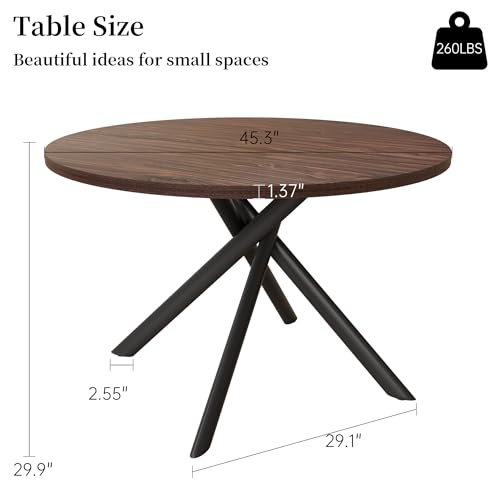
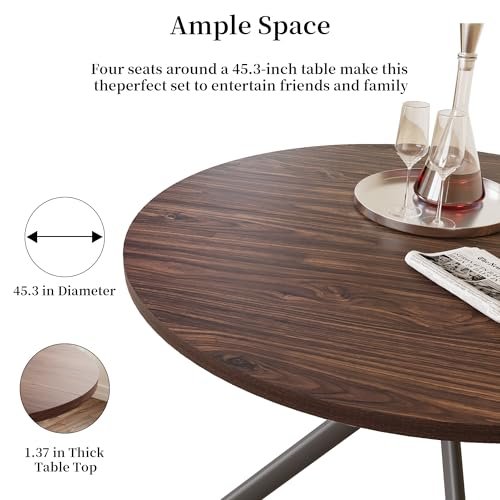
Five standalone tables for buyers who already have chairs or want to mix and match. The range covers a 43.3-inch cream round with metal legs and a cat's-paw pattern finish, a 45.3-inch dark walnut round on an X-shaped steel base, a 70.8-inch farmhouse rectangle with a 1.97-inch MDF top and 260 lb rating, an extendable oak-grain round that slides from 43.2 to 59.1 inches (with a 1.57-inch MDF top and sliding rails durability-tested for repeated extension), and the marble-look JA25002 rectangle that extends to 78.7 inches. All five use water-resistant, scratch-resistant surface finishes and adjustable leg pads for uneven floors.
MDF is not solid hardwood. If you want solid maple or oak, HIPIHOM's tables aren't what you're looking for — and that's worth stating plainly rather than dressing it up. But the honest answer to "is MDF good enough for a dining table?" is: at 1.57 to 1.97 inches thick with a proper surface finish, yes, for most households and most uses. Here's where the real differences lie.
For a dining table surface — the flat, horizontal plane where you set plates, rest forearms, and wipe down spills — MDF at this thickness behaves comparably to solid wood in the ways that matter for daily use. It doesn't warp or expand with seasonal humidity changes the way solid hardwood does, which is actually an advantage in homes without humidity control or in regions with wide seasonal swings. HIPIHOM's tabletop finishes are heat-resistant (hot dishes won't mark them), scratch-resistant, and waterproof on the surface — a wet glass left overnight isn't going to damage a properly finished MDF top.
The 70.8" farmhouse table's 1.97-inch top is genuinely dense. Tap on it and it sounds and feels like a substantial surface. The extendable round's 1.57-inch top is lighter and noticeably thinner — fine for a 43-inch table, but the difference is perceptible if you're comparing the two side by side.
Edges and corners. MDF at raw, unfinished edges absorbs moisture readily, which causes swelling and eventual delamination. HIPIHOM's surface coatings address this on the top face, but edge damage from sustained moisture — a wet towel draped over the edge regularly, or a table pushed against a kitchen sink — is a legitimate concern. Solid hardwood's edges can be re-sanded and refinished; MDF can't. You can protect against this with proper care, but you can't un-damage a compromised MDF edge.
Repair is the other gap. A solid wood table with a deep scratch can be sanded down and refinished. A scratch that penetrates HIPIHOM's surface coating on an MDF top is harder to address invisibly. The surface coatings resist surface scratches well — the 1.97-inch top on the farmhouse model is rated scratch-resistant — but "resistant" isn't "immune."
For a household buying a mid-range dining table that will see daily use, regular cleaning, and normal wear over five to ten years, a 1.57–1.97-inch MDF top with HIPIHOM's surface treatment is a reasonable, honest choice. It won't last 30 years the way a solid maple table might. But the solid maple table also costs three to five times as much, and most households replace dining furniture before the 30-year mark anyway. The question isn't "which material is better" in the abstract — it's whether MDF at this construction quality meets your actual use case, and for most everyday dining households, it does.
All of HIPIHOM's dining tables use MDF tops. That's not a compromise you should accept without understanding what it means — so here's a direct comparison of where MDF holds up and where solid wood genuinely has the edge.
Dimensional stability. MDF doesn't expand and contract with seasonal humidity changes the way solid wood does. In a climate-controlled American home — essentially everywhere with central heating and air conditioning — solid wood tables can develop hairline cracks in dry winters or slight warping over decades. A well-made MDF top doesn't do this, because the fiber compression process creates a uniform material with no grain direction to respond to moisture differentially.
Surface scratch resistance. HIPIHOM's MDF tabletops have a heat-resistant and scratch-resistant surface finish applied on top of the core material. This finish layer is the part that contacts your dishes, glasses, and utensils — not the MDF substrate itself. The 70.8" farmhouse table (B0FMXFXRZB) uses a 1.97-inch thick top with this surface treatment and is rated water-resistant, scratch-resistant, and heat-resistant. For day-to-day dining use — plates, glasses, serving dishes, occasional hot pans on a trivet — a properly finished MDF surface performs comparably to a solid wood surface with a similar topcoat.
Edge durability and repairability. The most vulnerable point on an MDF table is the edge — where the finished surface meets the raw MDF core. If that edge takes repeated hard impacts, or if moisture gets into an unfinished edge gap, MDF will swell, chip, and delaminate in a way that solid wood won't. You can sand and refinish a dented solid wood edge. You can't repair MDF edge damage the same way.
HIPIHOM's surface coating addresses moisture penetration at the top surface. But if you're moving the table frequently, storing it in a garage during off-seasons, or living somewhere with significant humidity cycling, the edges are the weak point to watch. This isn't a hypothetical failure mode — it's the actual failure pattern that drives negative reviews on MDF furniture across the industry.
Long-term sanding and refinishing. A solid hardwood table can be sanded down to bare wood and refinished every 10–15 years, adding decades to its useful life. That's not an option with MDF. When a solid-wood-top table starts looking worn, you can restore it. When an MDF-top table's surface finish is done, the table is done.
Not all MDF is the same. A 0.6-inch MDF tabletop and a 1.97-inch MDF tabletop are fundamentally different in terms of rigidity, surface feel, and resistance to flex under load. Thin MDF flexes. Thick MDF doesn't — not perceptibly at dining use.
HIPIHOM's standalone tables range from 1.57-inch MDF (the extendable round J24, B0DPMJGV8N) to 1.97-inch MDF (the farmhouse JA25003, B0FMXFXRZB). The 1.97-inch top is as solid as a mid-grade solid wood table for surface feel and resistance to wobble. The 1.57-inch top on the extendable round is lighter by design — that's part of what makes the extension mechanism practical — and it's still meaningfully thicker than the thin MDF tops you'll find on budget tables at similar price points.
MDF isn't the right call for every buyer. If you're planning to refinish furniture yourself every decade and keep pieces for 20+ years, solid wood makes more sense. If your dining area has significant humidity variation — an uninsulated porch, a basement with moisture issues, a climate with extreme seasonal swings and no central air — solid wood handles that better. And if you have a strong preference for the visible wood grain that comes from actual timber rather than a printed wood-look finish, the honest answer is that MDF tables don't deliver that regardless of how good the surface treatment is.
But for the majority of American households — climate-controlled apartments and homes, daily family use, buyers who want a table that looks clean and holds up without demanding refinishing projects — HIPIHOM's MDF tops at 1.57–1.97 inches with scratch and heat-resistant surface treatment are genuinely durable options. The Reddit instinct that MDF equals cheap furniture is fair when applied to 0.5-inch particle-board-core tables. It doesn't hold when the top is nearly 2 inches thick with a proper surface finish.
Most buyers already know roughly what they need before they start browsing — a table for four, something that expands for holidays, or just chairs to replace a set that finally gave out. The decision tree below maps three real household situations to specific HIPIHOM configurations, so you can skip the part where you measure your dining room three times and second-guess every product page.
This is the most common situation: two adults, one or two kids, a dining area that's probably 10 by 11 feet or smaller, and a need for something that holds up to daily use without demanding maintenance. For this household, the fixed rectangular sets — either the 47.2" JS7394 or the 55.1" version — are the right call. The 47.2" model (47.2"L × 27.5"W × 29.9"H) fits comfortably in a 10-foot-wide room with the standard 36-inch clearance on both long sides. The 55.1" version works better if the room is at least 11 feet across and you want a little more elbow room per person.
Both come with four chairs rated to 330 lbs each, and the U-shaped ergonomic chairs' PU leather surface wipes clean with a damp cloth — which matters when kids are eating cereal at 7 a.m. The cat's-claw texture tabletop variant is worth considering if you have pets; it's designed specifically to hide the light surface marks that accumulate over time. Neither table is solid hardwood, but the MDF top with a scratch and heat-resistant finish handles hot dishes and daily contact without issue.
You seat four people on a Tuesday and need to seat eight for Thanksgiving. A fixed 70.8" table solves the holiday problem but dominates the room every other day of the year. This is exactly the situation the JA25002 extendable set was designed for.
It starts at 63 inches — comfortable for four to six people at daily meals — and extends to 78.7 inches when you need to seat eight. The leaf stores inside the table, so there's no garage shelf required and no 15-minute setup when guests are arriving. The full set (B0F9J5G4DL or B0C6F2YHP8) includes six matching faux leather chairs, which covers most dinner-party scenarios without needing to borrow chairs from another room. The marble-look MDF tabletop is waterproof and wipes clean, which is relevant when you're clearing dishes after a full gathering.
One honest caveat: extendable tables have a center join point that fixed tables don't. The JA25002 uses a sliding rail mechanism that has been durability-tested for repeated extension cycles, and the steel leg structure is designed to maintain stability at full 78.7-inch extension. But if absolute rigidity is your top priority and you never actually need to seat more than six, the 70.8" farmhouse table (B0FMXFXRZB) with its 1.97-inch MDF top and heavy-duty legs is the more solid option — you'd just need to add chairs separately.
Apartments, breakfast nooks, and studio dining corners have one real constraint: floor space. A round table is almost always the better answer here, because it eliminates the sharp corners that cut into circulation paths and seats four people in a smaller footprint than a rectangular equivalent.
The 43.3-inch round set with corduroy shell chairs (B0DQH2N5D7) is the most compact complete solution — the chairs tuck fully under the table when not in use, which matters when you need to reclaim that floor space. At 43.3 inches across, it fits in a 9 × 9-foot dining area with adequate pull-out clearance. If you want the ability to expand occasionally without buying a whole new table, the extendable round table (B0DPMJGV8N) goes from 43.2 inches to 59.1 inches using a sliding rail mechanism and a 1.57-inch MDF oak-grain top — sold table-only, so you'd pair it with whatever chairs you already have or pick up the JD9025 or JD9213 sets separately.
For the bench question: the L-shaped corner bench (B0FK2J3P4Y) is worth looking at if you're setting up a kitchen nook against two walls. It seats four to five people in the corner footprint and pushes flush to the wall when the table is moved aside. The high-density sponge cushion and fabric upholstery are more comfortable for longer meals than bare bench wood, though the fabric requires a bit more care than PU leather if spills are frequent. The 330-lb metal leg rating means the structure itself is solid despite the compact size.
Most dining chair product pages tell you a chair is "comfortable" and "durable." Neither word means anything without specifics. Here's what actually separates a chair that holds up for five years of daily use from one that starts wobbling at month eight — and how to evaluate any chair, including HIPIHOM's, before you buy.
These are two different specs, and buyers frequently confuse them. Thickness tells you how deep the cushion is. Density tells you how long it stays that way.
A 4-inch cushion filled with low-density foam will flatten to 2 inches within a year of regular use. A 3-inch cushion filled with high-resilience foam will still be 3 inches two years later. HIPIHOM's fabric upholstered chairs use high-resilience foam — the JD9213 models specifically describe "high-density sponge" filling in conjunction with the ergonomic U-shaped seat design. The JD9025 series uses "high-elastic sponge cushioning," which is the same practical spec described differently. What matters is whether the foam is rated for sustained compression — not just how thick it measures in the box.
For context: foam tested to hold shape through 5,000+ compression cycles is the threshold that separates chairs meant for daily family dining from chairs designed to look good in a showroom. Ask for that spec before you commit to any brand, including this one.
Low-quality PU leather chair failures almost always start at the seams, not the flat surface. The flat surface looks fine for 18 months. Then the stitching at the seat corners or backrest edge begins to separate, and the material starts pulling away.
The JD9213 series specifically calls out "exquisite stitching and thickened material" — the stitching detail matters because it indicates the upholstery was reinforced at the stress points where cheaper versions fail. This isn't a marketing claim you can verify with a photo, but it's worth specifically checking in customer reviews for any chair you're evaluating. Look for review photos taken after 12+ months of use, specifically at the seam lines on the seat corners and backrest edge. That's where you'll see the difference between a chair with properly finished edges and one that wasn't.
Both HIPIHOM chair families — the JD9025 and the JD9213 — use carbon steel leg frames rather than standard steel tube. The distinction matters because carbon steel has a higher carbon content, which increases rigidity and resistance to flex under load. A standard steel tube leg under a 250-lb person over daily use will develop micro-flex at the joint welds over time. A carbon steel frame resists this significantly better.
The practical indicator you can check without metallurgy knowledge: the weight rating. HIPIHOM's JD9025 and JD9213 chairs both carry a 330-lb per-chair rating. That number isn't just about accommodating larger individuals — it's a proxy for the structural safety margin built into the frame. A chair rated to 330 lbs for a user who weighs 180 lbs has substantial buffer. A chair rated to 250 lbs for the same user is already operating at a much thinner margin under dynamic load conditions (sitting down hard, rocking, leaning).
A 330-lb weight capacity sounds like it only matters to buyers over 300 lbs. It doesn't. Furniture weight ratings are tested under static load conditions — meaning a person sitting still. Real dining use involves dynamic loading: dropping into a chair, leaning back, kids using the rungs as a step stool. The actual safe operational threshold under dynamic conditions is meaningfully lower than the static rating.
A 330-lb static rating gives you a realistic safe margin for adults of most sizes under normal daily use. A 250-lb rating in the same chair design means you're already operating closer to the structural limit during the normal forces of a family dinner. This is why the weight rating matters for every buyer, not just the heaviest person in the household.
The JD2016 Mermaid chairs use a chrome base rather than carbon steel legs. Chrome bases are chosen primarily for their visual finish — the high-gloss metallic look is the point — not for maximum structural rigidity. The 330-lb rating is the same across both the Mermaid and the JD9025/JD9213 series, so the structural floor is consistent. But the aesthetic intent is different: the Mermaid chairs (17.02"W × 17.32"D × 37.52"H) are taller and more visually prominent than the JD9213's lower profile (15.72"W × 17.72"D × 32.82"H). If your priority is presence and mid-century visual weight, the Mermaid is the right choice. If you want the most ergonomically functional seat for long dinners, the JD9213's U-shaped seat with waterfall edge is designed specifically for that use case — the curved edge reduces thigh pressure for people who sit through extended meals.
We pulled in this independent walkthrough because it gives you something product photos can't — a real look at how these chairs show up in an actual home setting, not a staged studio. You'll see the materials, the finish, and the overall build from someone who ordered them off Amazon and put them together himself. It's the kind of honest first impression that helps you decide whether these chairs fit what you're picturing before yours arrive.
"Got the 55" gray table with six brown chairs for our first real dining room — we'd been eating on a folding table for two years. The 2-piece jointed walnut top looks genuinely nice in person, not plasticky. My one note: give yourself a full afternoon for assembly, not 30 minutes. But once it's together, it hasn't budged."— Danielle R., first-time apartment buyer upgrading from temporary furniture, on Dining Table Set
"We needed something that seats six on weeknights and eight when family comes over for the holidays. The JA25002 extendable set does exactly that — 63 inches collapses to a size that doesn't swallow our dining room, and 78.7 inches handled Thanksgiving without any wobble at the center join. The marble-look top wipes clean fast."— Marcus T., space-constrained host in a 900-square-foot condo, on Dining Table Set
"Bought the JD9213 ergonomic chairs in off-brown for my kitchen nook. The U-shaped backrest actually does something — I notice the difference after a long dinner compared to my old flat-back chairs. The waterfall seat edge is a real feature, not marketing language. One chair had a slightly uneven rubber foot out of the box; the adjustable pad fixed it in seconds."— Sofia M., style-conscious buyer who compared these to West Elm options before ordering, on Dining Chair
"The 70.8" farmhouse table was the right call for our open kitchen. At 1.97 inches thick, the tabletop feels substantial — you can set a heavy cast iron pan down without that hollow thud you get from thinner MDF. Seats six with honest elbow room. Just know it weighs 70 pounds; you'll want a second person to move it into position."— Tom B., growing family replacing a wobbly six-year-old set, on Dining Table
"The L-shaped corner bench fits our breakfast nook perfectly — we pushed it flush against two walls and it freed up chair-pull space we didn't know we were missing. The high-density sponge cushion holds up fine for morning coffee. It's fabric, not PU leather, so I do wipe it more carefully than I would a vinyl surface, but so far no staining issues."— Priya K., small-space household converting a corner nook into a proper seating area, on Dining Bench
"Ordered the bear ears headbands as a party favor set for my daughter's birthday — six packs for the kids, plus picked up the 15th anniversary cake topper for my in-laws the same order. Both arrived fast, the topper looked exactly like the photos, and the rhinestones stayed put when we washed it off after the party. Good value for a one-stop party accessories order."— Angela P., party planner sourcing supplies for multiple events at once, on Costume Accessory and Cake Topper
HIPIHOM's dining tables use MDF construction — not solid hardwood. The tabletops range from 1.57 inches thick on the extendable round model (J24) up to 1.97 inches on the JA25003 farmhouse table. All are finished with scratch-resistant, heat-resistant, and water-resistant surfaces. That finish does the practical work that buyers usually expect from solid wood at the dining surface level.
The main trade-off is the center seam when extended. HIPIHOM's JA25002 table uses a sliding rail system tested for repeated extension cycles, and the lock mechanism is designed to prevent flex — but any extendable table has a join point that a fixed table doesn't. The leaf stores inside the table, so there's no storage problem. The real limitation is that the center seam is visible at full extension.
Check the frame material, foam spec, and stitching at stress points. HIPIHOM's JD9025 and JD9213 chairs use carbon steel frames rated to 330 lbs per chair. The foam is high-density sponge in both PU leather and fabric upholstery versions. On the PU leather models, look at the stitching along the seat edges — that's where cheaper chairs fail first. Thickened material with reinforced seams is the spec to ask about.
The JS7394 47.2-inch table is designed for four people. At that length, two chairs fit comfortably on each long side. The table is 27.5 inches wide, which gives you standard elbow room without crowding. It's not a six-person table regardless of chair size — four is honest capacity for daily use, with a fifth seat possible at an end for occasional guests.
Yes — wipe spills with a damp cloth, no spot treatments needed. The PU leather upholstery on the JD9025 and JD9213 chair lines is waterproof and stain-resistant. The practical caveat: PU leather can crack over time at stress points under heavy daily use, particularly at the seat crease. HIPIHOM's thickened material and reinforced stitching are designed to delay that, but it's not equivalent to full-grain leather longevity.
Backless benches tend to get uncomfortable past 45–60 minutes. HIPIHOM's JA7054 L-shaped corner bench solves this with a curved backrest — it's not a backless bench. The high-density sponge cushion and ergonomic backrest design make it more comparable to a dining chair for comfort duration. That said, individual seats with lumbar support still edge out bench seating for very long dinners.
The JA25002 extendable table is 63 inches collapsed and 78.7 inches extended. For comfortable chair pull-out on all sides, plan for a room at least 10 feet wide and 12 feet long at minimum. Extended to 78.7 inches, you'd want 13 feet of length to maintain full 36-inch clearance. In tighter rooms, push-in seating like benches on one side reduces the clearance you need.
A bench on the wall side of a table works well in small kitchens — it slides fully under the table when not in use, which a chair can't do as cleanly. HIPIHOM's corner bench (67 inches, 330 lb rated) fits this configuration and seats 4–5 people. The trade-off is that getting in and out of a bench against a wall is less convenient for older adults or anyone with limited mobility.
The JD2016 Mermaid chairs have a seat height of approximately 17.7 inches (based on the JD9025 spec, which shares the same height). Standard dining tables run 28–30 inches high. Any table in that height range pairs correctly. If your existing table runs taller than 30 inches, verify the clearance between the seat and the underside of the table apron before ordering.
The Bear Ears Headbands 6-Pack (B0CN8JGW4Z) are made from soft plush material over a lightweight metal frame. Each headband has a static diameter of about 6.3 inches and stretches to approximately 8.6 inches, fitting most adult head sizes. The material is described as skin-friendly and hand-washable. They're not designed for outdoor or wet conditions — the plush requires air drying.
Yes. The 15th and 16th milestone cake toppers (alloy with rhinestones, 9.5 inches tall by 4.5 inches wide) are designed to insert and remove cleanly. Pull them from the cake after the event, wipe off residue, and store for reuse. The alloy construction is durable enough to hold the rhinestones across multiple uses, though hand-washing rather than dishwasher is the safe approach.
The JA25003 farmhouse table — 70.88 inches long by 31.51 inches wide — seats six people for everyday meals, with three per long side at roughly 10–11 inches of width each. A seventh seat at an end is possible for casual gatherings. The 1.97-inch MDF top supports up to 260 lbs of distributed weight. It's a fixed table with no extension option.
HIPIHOM's catalog divides cleanly into two eras. The furniture line — dining table sets, standalone dining tables, dining chairs, and the corner bench — is where the brand has clearly focused its development energy. The product specs tell that story: 1.57–1.97-inch MDF tabletops, carbon steel chair frames rated to 330 lbs, ergonomic seat designs with verified foam density, extendable mechanisms stress-tested for repeated use. These aren't specs you attach to products without putting real time into the category. The furniture line covers everything from a compact 43.3-inch round set for a studio apartment to a 70.8-inch farmhouse table that seats six daily, with an extendable 63–78.7-inch set that bridges the gap for households that host occasionally. Three chair families — the JD9025 curved-back standard, the JD2016 Mermaid with its chrome base, and the JD9213 ergonomic U-shaped series — give buyers genuine options within the same quality tier.
The party and celebration accessories — Mother's Day foil balloons in 20- and 24-packs, rhinestone alloy cake toppers for 15th and 16th milestones, costume headbands including the blue fuzzy bow headband and the bear ears 6-pack — read as an earlier phase of the brand. They're real products with real reviews (the bear ears headband carries 4.8 stars across 34 ratings; the blue headband 4.7 stars across 112), but they don't share the same design identity as the furniture line. The craft embellishment category — 36-piece handmade crochet flower appliques in 18 colors, 100% cotton — and the gift wrap bags, including 100-pack Valentine's cellophane treat bags and 50-pack drawstring candy bags in EVA plastic, round out this earlier catalog era. Taken together, the party, craft, and gift wrap categories point to a brand that started broad and discovered its strongest ground in furniture.
What connects everything, honestly, is a focus on practical domestic use at a realistic price. Whether that's a dining table that seats eight when you need it and four when you don't, or a foil balloon set that ships in time for Mother's Day, HIPIHOM's product decisions favor function over aspiration. The furniture line is where that approach has been refined most — and where buyers spend the most time looking before they commit.
Every dining set decision comes down to real numbers: dimensions, weight ratings, material specs, and how it actually fits your space.
HIPIHOM is a furniture-first brand offering dining table sets, standalone dining tables, dining chairs, and a corner bench, alongside a catalog of party accessories, costume headbands, cake toppers, crochet appliques, and gift wrap bags. All furniture products are sold through the HIPIHOM Amazon Store, where the full range of configurations, sizes, and color options are listed.
For questions about any HIPIHOM product — assembly guidance, missing hardware, or post-delivery issues — contact the brand directly through Amazon's messaging system on any product listing. HIPIHOM publishes an installation guide with each furniture piece; an Amazon Live assembly video is also available for the dining chair lines. Response times follow Amazon seller standards.
All HIPIHOM purchases on Amazon are covered by Amazon's A-to-Z Guarantee, which protects buyers if an item arrives damaged, is significantly not as described, or doesn't arrive at all. For furniture items shipped via Amazon fulfillment, standard return windows apply — check the specific listing for return eligibility details before ordering.